"The canvas does not demand perfection on day one; it merely asks for your curiosity and the courage to make the first brushstroke."
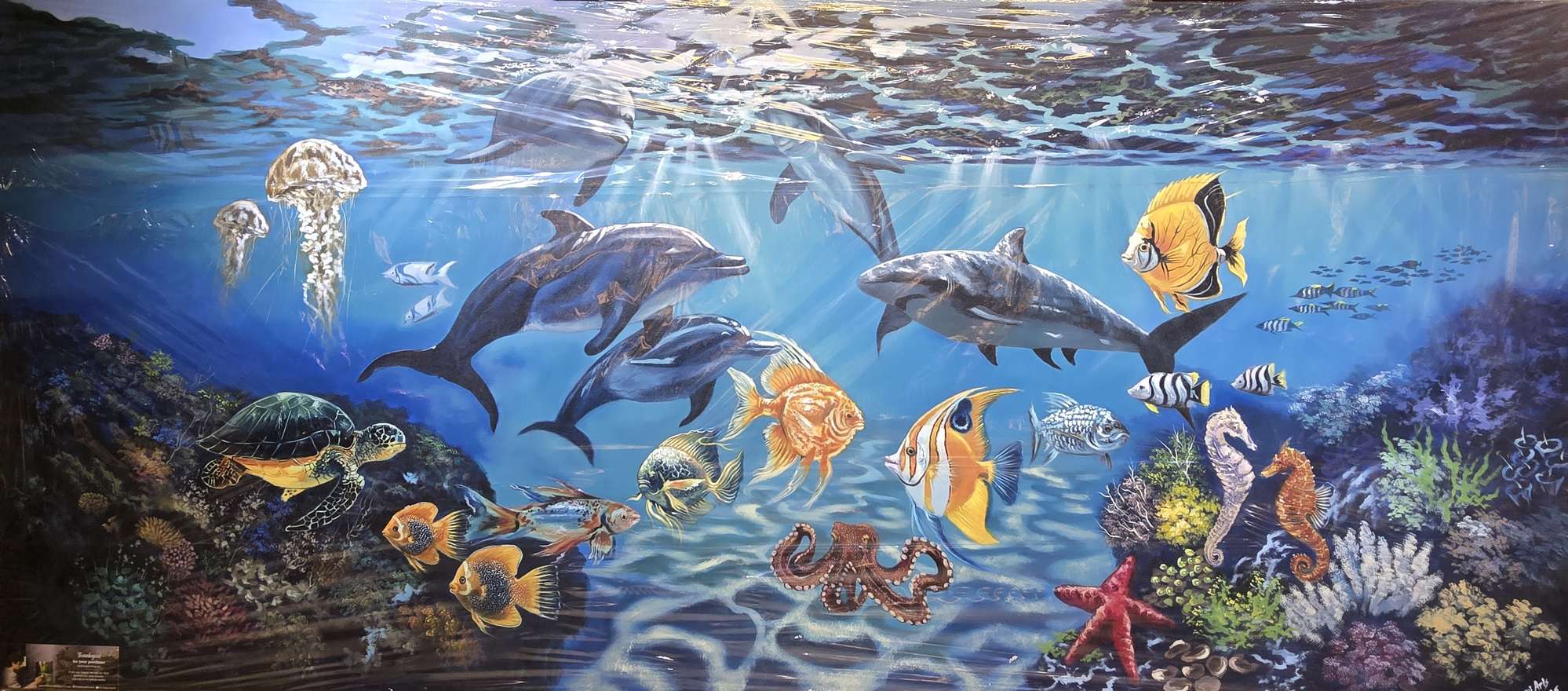
Acrylic is widely considered the most versatile and forgiving medium for artists starting their creative journey. Unlike oils which require slow-drying mediums and odorless mineral spirits, acrylics are water-soluble, quick-drying, and virtually odorless, making them the ultimate medium for home painting setups.
1. Essential Supplies for Beginners
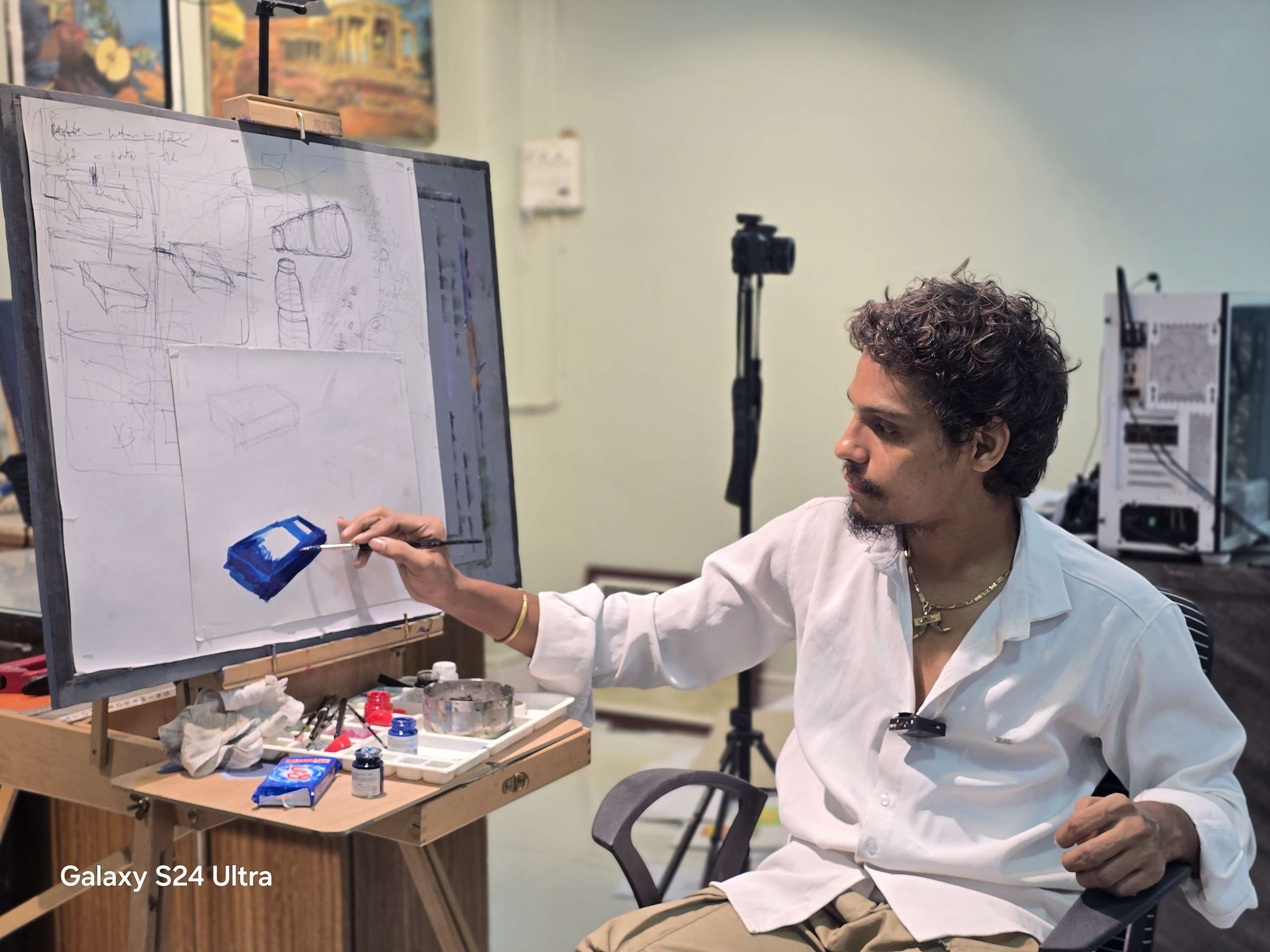
You do not need an overwhelming catalog of supplies to produce striking art. At Thangaraj Arts, we encourage beginners to start with a focused core toolkit:
- Heavy-Body Acrylic Paints: Primary triad (Warm Cadmium Red, Ultramarine Blue, Lemon Yellow), plus Burnt Umber and Titanium White.
- Stretched Canvas or Canvas Boards: 10"x12" or 12"x16" double-gesso primed 100% cotton boards are ideal because they do not warp.
- Three Core Brushes: A 3/4" Flat brush for washes and sky gradients, a #6 Round brush for main forms, and a #1 Fine Detail brush for intricate contours.
- Stay-Wet Palette or Ceramic Tile: Prevents acrylic paints from drying out prematurely while you work.
lightbulb Studio Tip: Palette Moisture Management
Keep a fine mist spray bottle filled with clean water beside your easel. Lightly misting your paint dollops every 15 minutes keeps them workable for hours.
2. Designing an Ergonomic Painting Space
Good lighting and comfortable posture transform painting from a tiring chore into a meditative sanctuary. Position your easel at a 45-degree angle to natural daylight from a window, ensuring light falls over your non-dominant shoulder to avoid casting hand shadows over your canvas.
3. Mastering Acrylic Color Blending
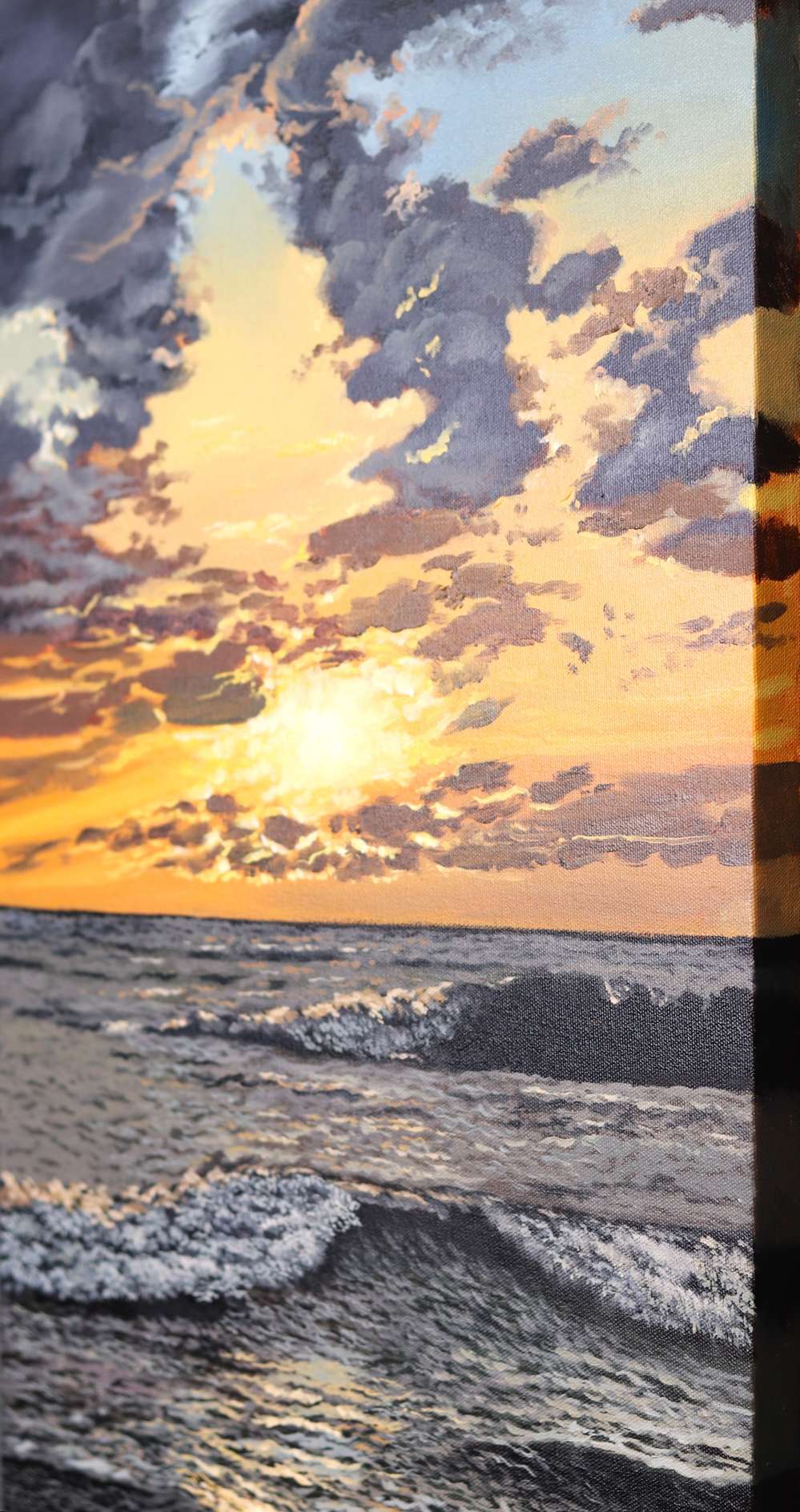
Because acrylics dry quickly, blending soft sky gradients requires confident, horizontal brushstrokes with slightly dampened bristles. Work with two complementary values simultaneously on your canvas while both are still wet (the classic wet-on-wet technique).
4. Your First Canvas Painting Project
A sunrise or twilight landscape is the ultimate starter composition. Begin by blocking in the deepest horizon color first, blending upwards towards warm gold and pale ivory at the zenith, then overlaying sharp silhouette trees or mountains once the base layer dries.
5. Brush Care & Surface Preservation
Never let acrylic paint harden on synthetic bristles. Swirl brushes in lukewarm water immediately after completing a passage, reshape the tips with mild olive oil soap, and lay them flat to dry. After 72 hours of curing, seal your canvas with an archival satin varnish for lifetime UV protection.